
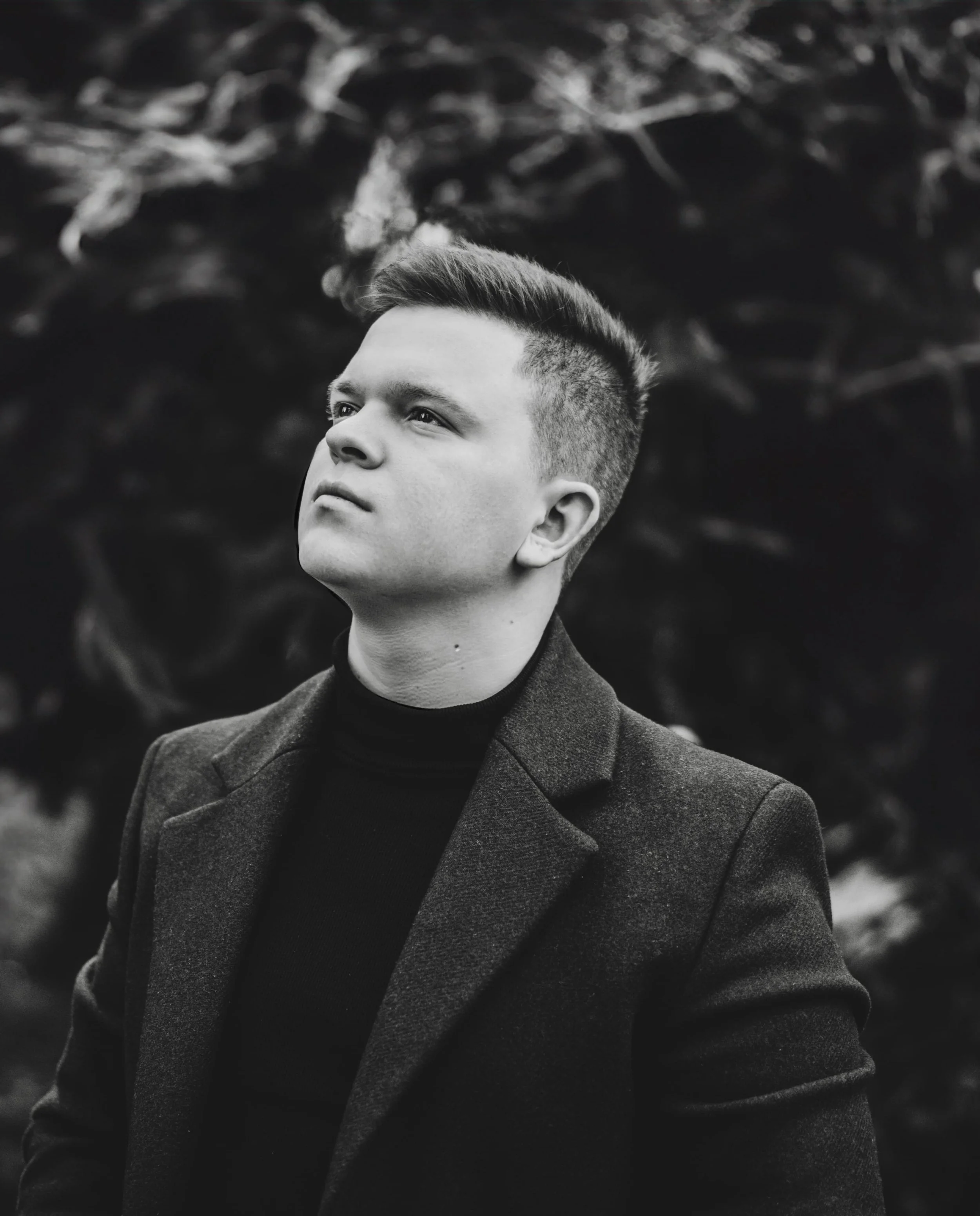
Dmytro Semykras
Piano
From an early age, Dmytro Semykras has seen music as a way of creating a genuine connection with the listener. While technical precision is essential to his playing, it is never an end in itself. Rather, it serves a deeper purpose: bringing the music closer to the audience and allowing its emotional meaning to be fully experienced.
Currently studying at the University of Music and Performing Arts Graz with Milana Chernyavska, Dmytro has built an increasingly international profile through performances across Europe and the United States. He has received awards at the Santa Cecilia International Piano Competition, the International Competition for Young Pianists in Memory of Vladimir Horowitz, the Cantù International Piano Competition, the Ettlingen International Piano Competition, the International Competition for Young Pianists in Memory of Vladimir Krainev, and the Île-de-France International Piano Competition, including First Prizes at the Cantù and Île-de-France competitions. As a soloist, he has appeared with the Orquestra Sinfónica do Porto Casa da Música and the Kharkov Philharmonic Orchestra. He is also a founding member of a piano trio now in its fourth year, performing across Europe and the United States, an ensemble through which chamber music has become as central to his artistic life as the solo recital.
What distinguishes Dmytro’s work most clearly is the way he constructs programs. Rather than treating a concert as a sequence of individual pieces, he builds each program around an idea: a question, an emotional territory, or a thread running across centuries. One project traces sonata form from Scarlatti through to Prokofiev: the same architectural instinct, refracted through very different minds across three hundred years. Another, which he calls “Dreams,” brings together Tchaikovsky, Schumann, Prokofiev, and Ravel around a shared emotional territory: the way artists of great maturity look back at childhood. The pieces come from different countries, eras, and musical languages, yet when placed together, they seem to be in quiet conversation with one another.
At the heart of Dmytro’s work is a belief that music is most powerful when it creates a shared experience between performer and audience. Through thoughtful programming, collaborative exploration, and a deep commitment to the expressive possibilities of the piano, he strives to create performances that resonate long after the final note has faded.